Calatheas are native to the rainforests of Central and South America. Their leaves can look like peacock feathers, pinstripes, rattlesnake skin or abstract oil paintings. A unique characteristic of these plants is that their leaves fold upward at night, and lower during the day, oftentimes turning to follow the sun.
Their name is derived from the Greek word κάλαθος (pronounced: "kalathos"), which means “basket,” reflecting the ancient indigenous peoples’ practice of using the plant’s large, durable leaves to weave waterproof baskets and mats. In some Amazonian cultures, these leaves also served as versatile materials for food wrapping and thatching roofs.
European explorers and botanists discovered Calatheas in the 18th and 19th centuries. Captivated by their leaf patterns, they transported specimens back to Europe. Calatheas’ popularity is strong today…for understandable reason. Many of these are now being classified as Goeppertia rather than Calathea based on DNA research.
Varieties and Care
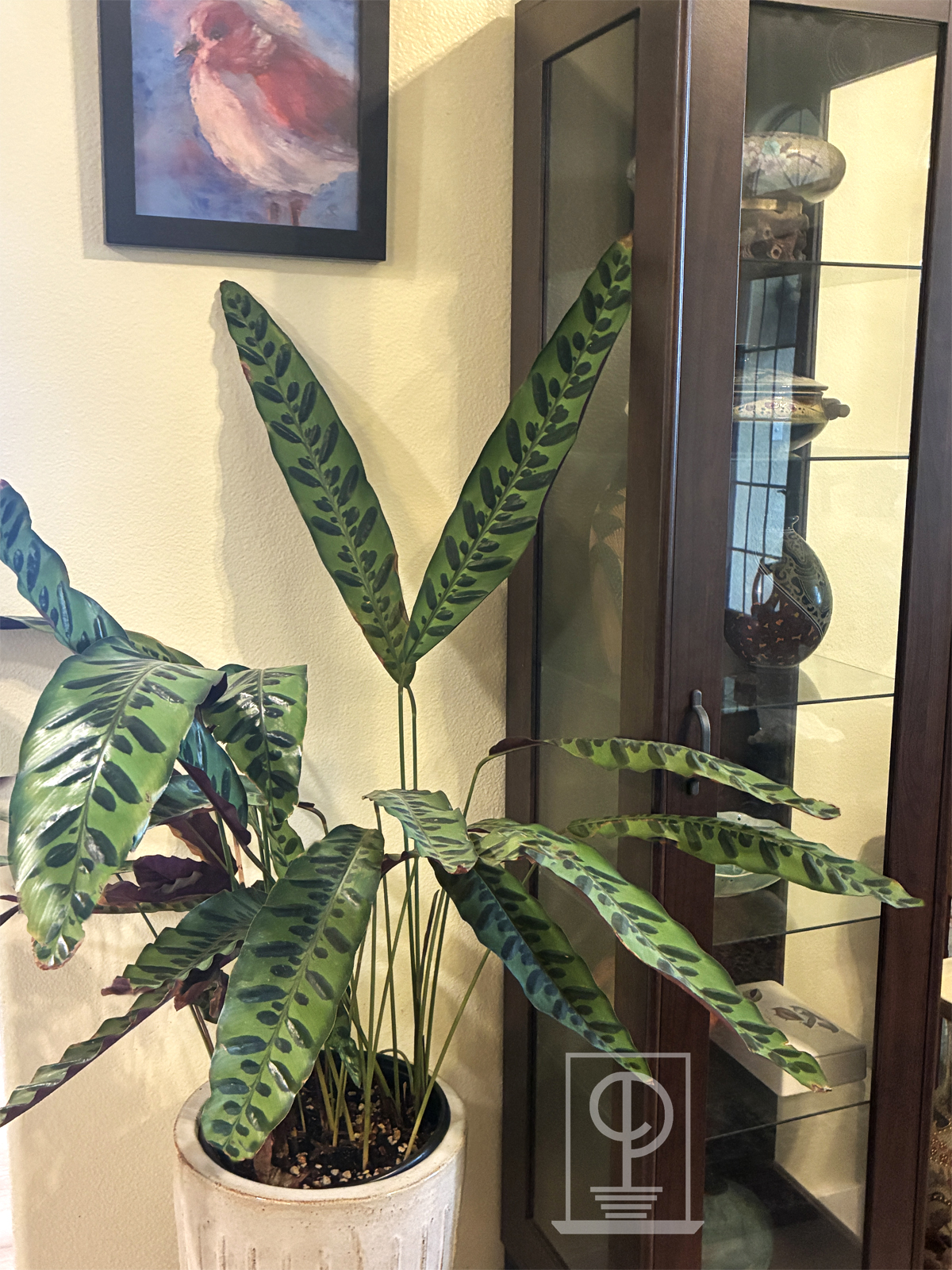
lancifolia
The "Rattlesnake Plant" features long, slender, sword-shaped leaves, lush green and marked with dark green, almost black, oval spots. Its leaf undersides are a striking purple. Lancifolia’s leaves stand more upright than many other species, particularly as the plant matures. This is a slow grower.
| Calathea lancifolia Care |
|---|
| Difficulty | Easy |
| Light | Bright, indirect light |
| Temperature | 65°F – 75°F |
| Water | Keep soil consistently moist but not soggy; Somewhat sensitive to high mineral content in water. |
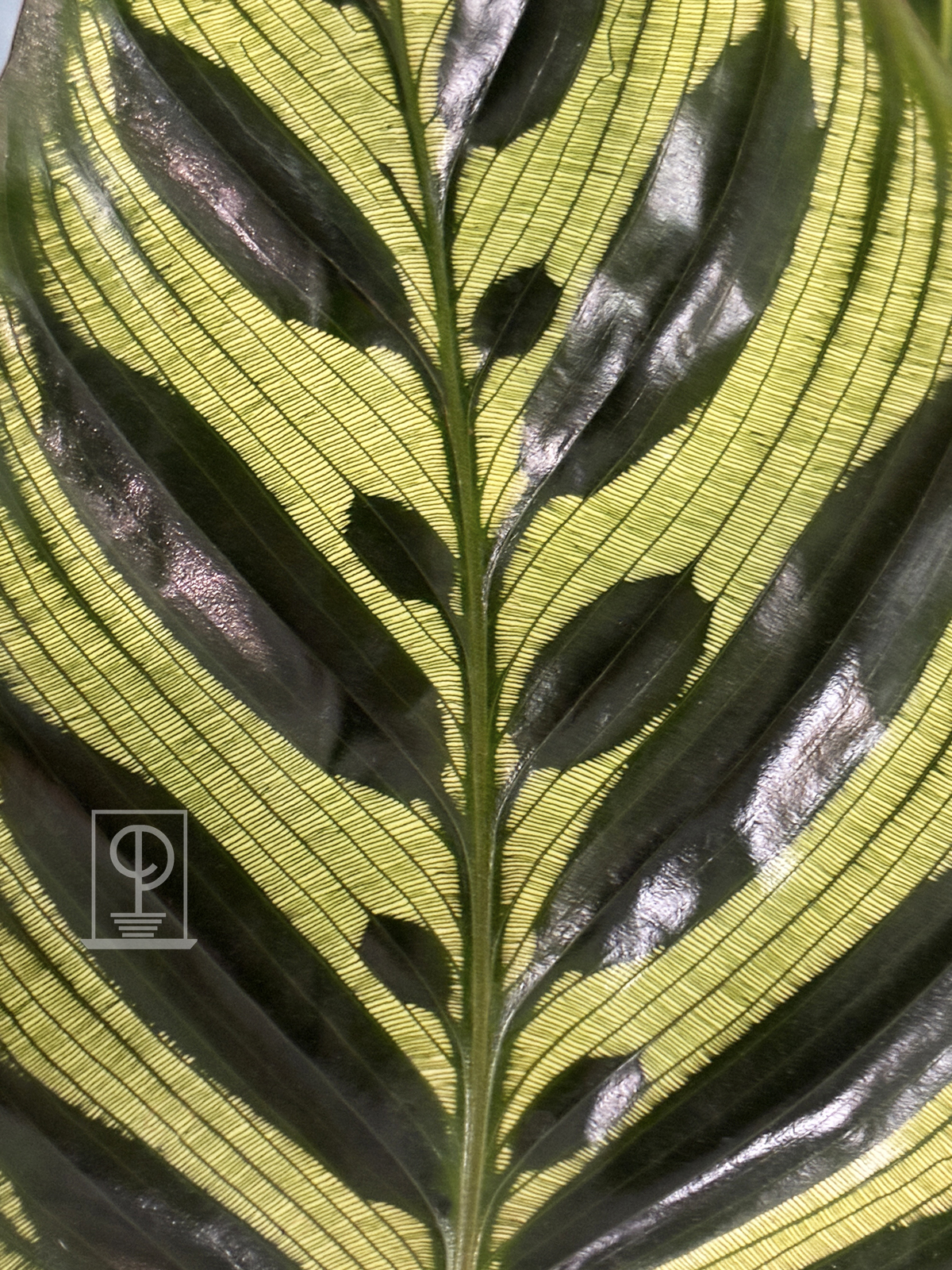
makoyana
Commonly known for its painting-like foliage, this plant has thin, papery leaves with a dark green feathered pattern on a pale green background. The pattern is perfectly mirrored in a reddish-maroon hue on the underside, creating a translucent stained-glass effect.
| Calathea makoyana Care |
|---|
| Difficulty | Moderate |
| Light | Moderate to bright indirect light |
| Temperature | 60°F – 75°F |
| Water | Grows well here at the coast as it likes humidity. Supplemental humidity may be needed in warmer areas. We find some municipal water (depending on the town) is fine with this plant but if you see brown edges on the leaves consider switching to distilled water. |
veitchiana
This is also called the Medallion Calathea because of its large, round, medallion-like leaves that feature concentric rings of emerald, silver, and cream. The undersides are a rich burgundy, and the plant has a bushy, compact growth habit.
| Calathea veitchiana Care |
|---|
| Difficulty | Difficult |
| Light | Low to moderate indirect light |
| Temperature | 65°F – 80°F |
| Water | Water when the top half-inch of soil is dry; needs very high humidity. |
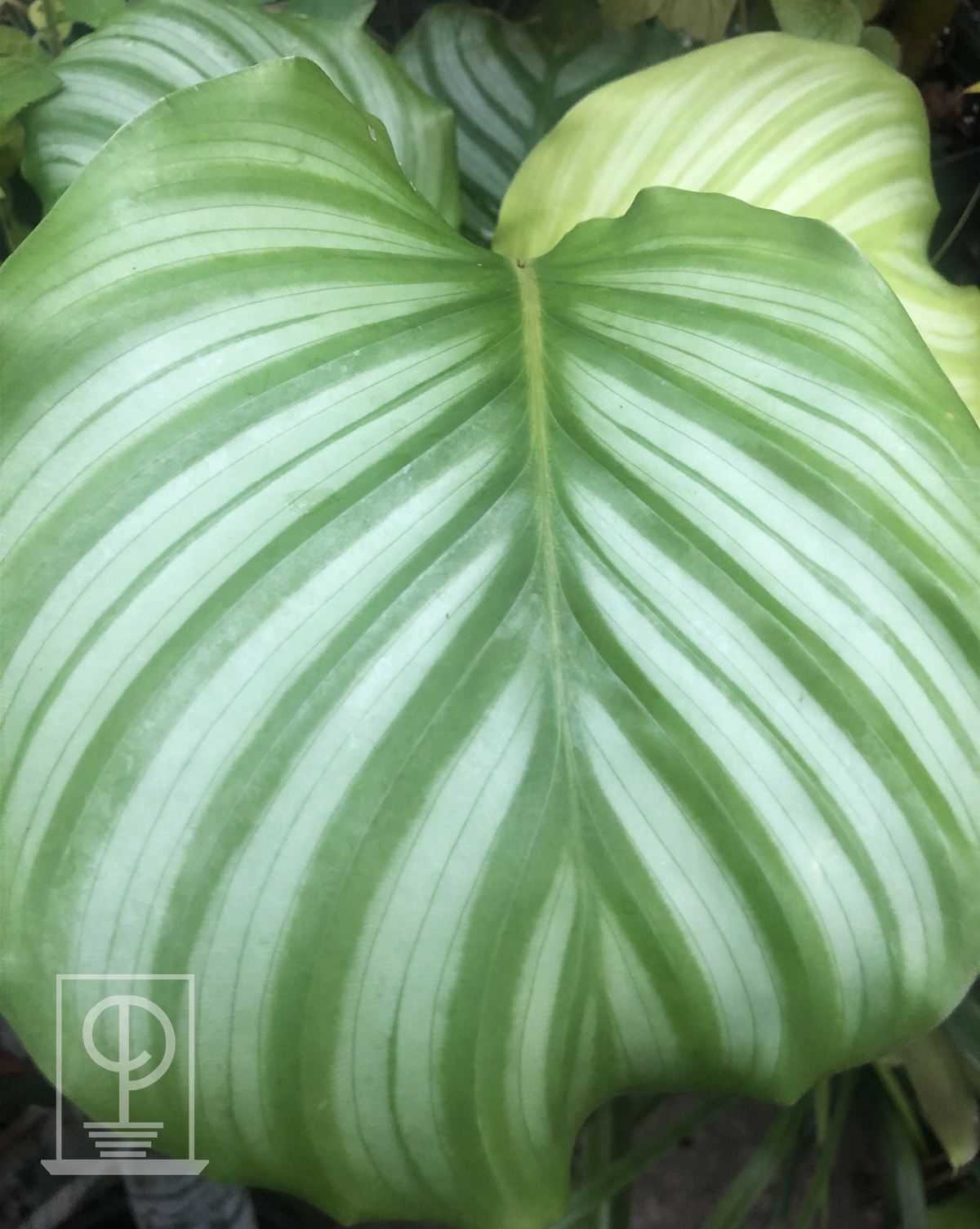
orbifolia
Distinct for its oversized, bright silvery-green leaves, it is one of the largest Calatheas, making it a dramatic statement piece in any collection. It is not the easiest Calathea to care for, however.
| Calathea orbifolia Care |
|---|
| Difficulty | Difficult |
| Light | Moderate indirect light (prone to scorching) |
| Temperature | 65°F – 75°F |
| Water | Sensitive to both overwatering and drying out; prefers consistent moisture. Cannot handle high levels of minerals in its water. |
concinna
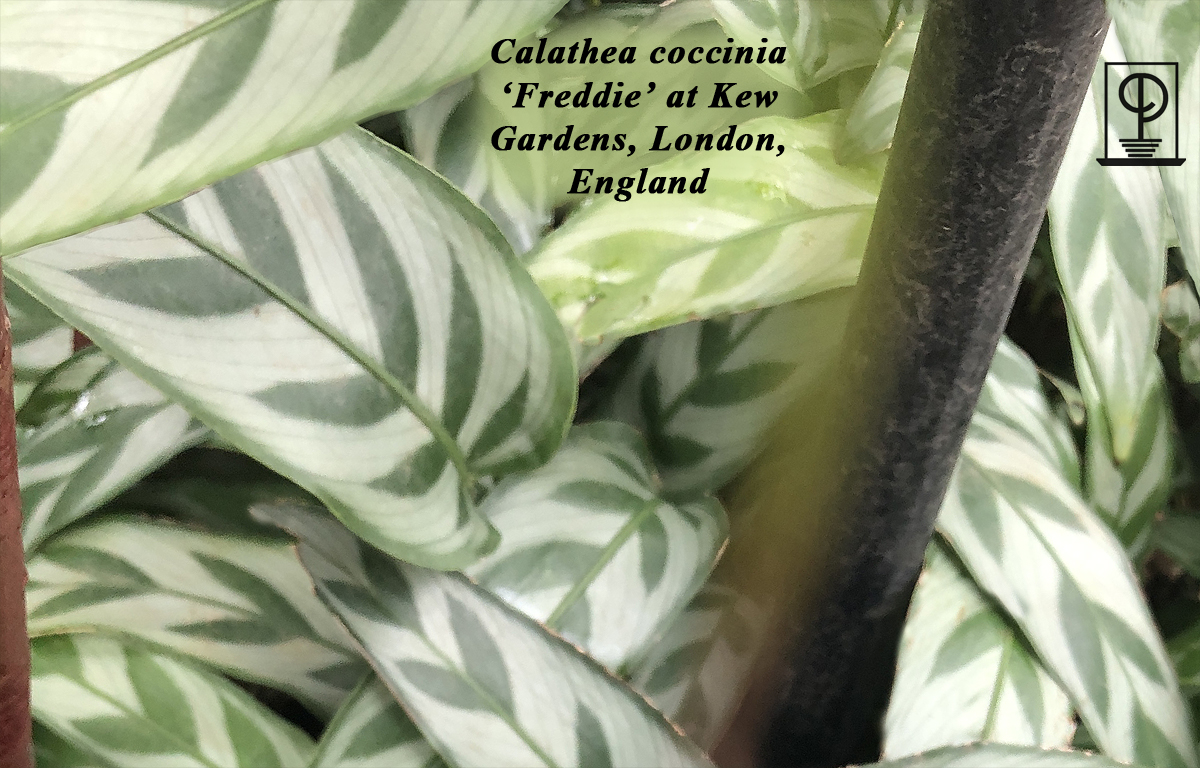
Commonly seen as its cultivar "Freddie", it is characterized by narrow, light-green elliptical leaves with dark-green “zebra” stripes that radiate from the center.
| Calathea concinna Care |
|---|
| Difficulty | Easy |
| Light | Bright, indirect light; can tolerate slightly lower light |
| Temperature | 65°F – 80°F |
| Water | Thoroughly water when the top inch of soil is dry. |
burle-marxii
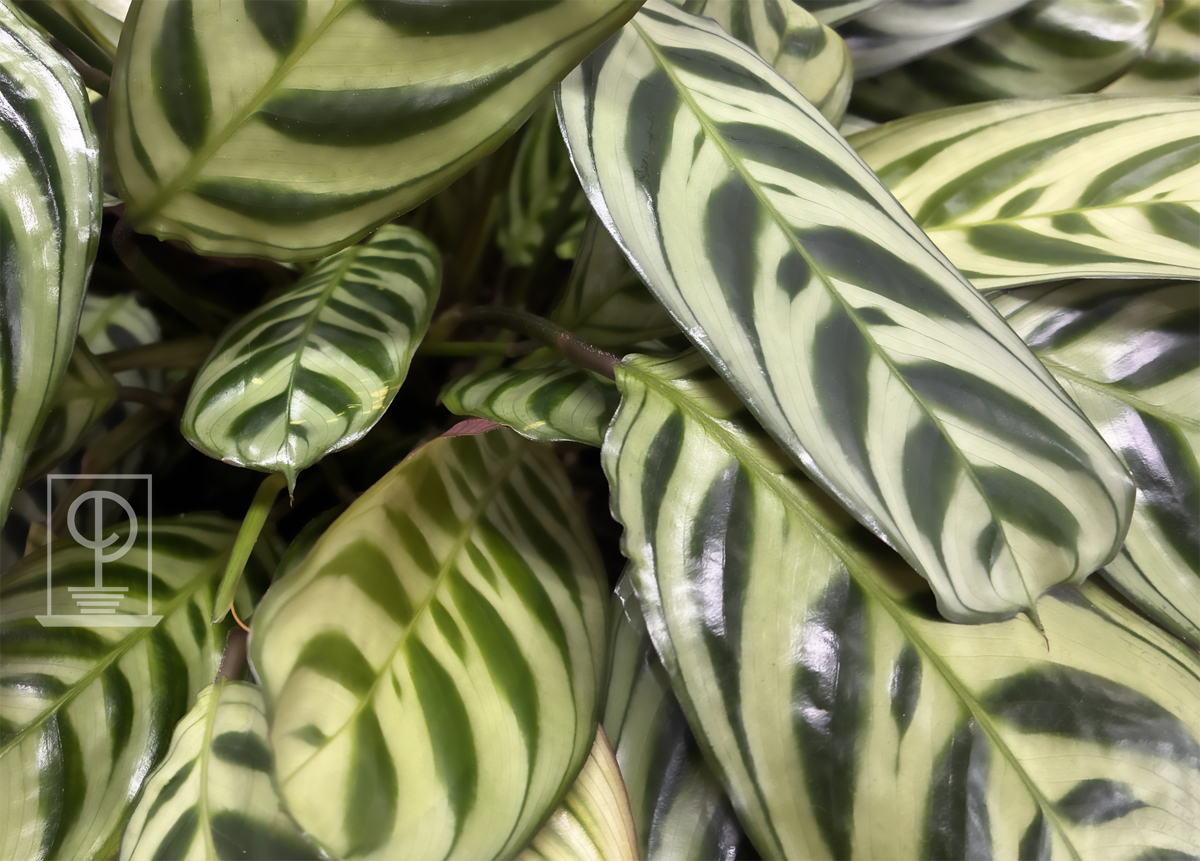
Known more commonly as "Burle Marx", this species features oval, silvery-green leaves with bold, dark-green herringbone stripes that resemble a fish skeleton. It is a low-growing, clumping variety that is particularly active in its nightly leaf movements.
| Calathea Burle Marx Care |
|---|
| Difficulty | Easy to Moderate |
| Light | Low to bright indirect light |
| Temperature | 60°F – 80°F |
| Water | Keep soil moist; more tolerant of slight drying than other Calatheas. |
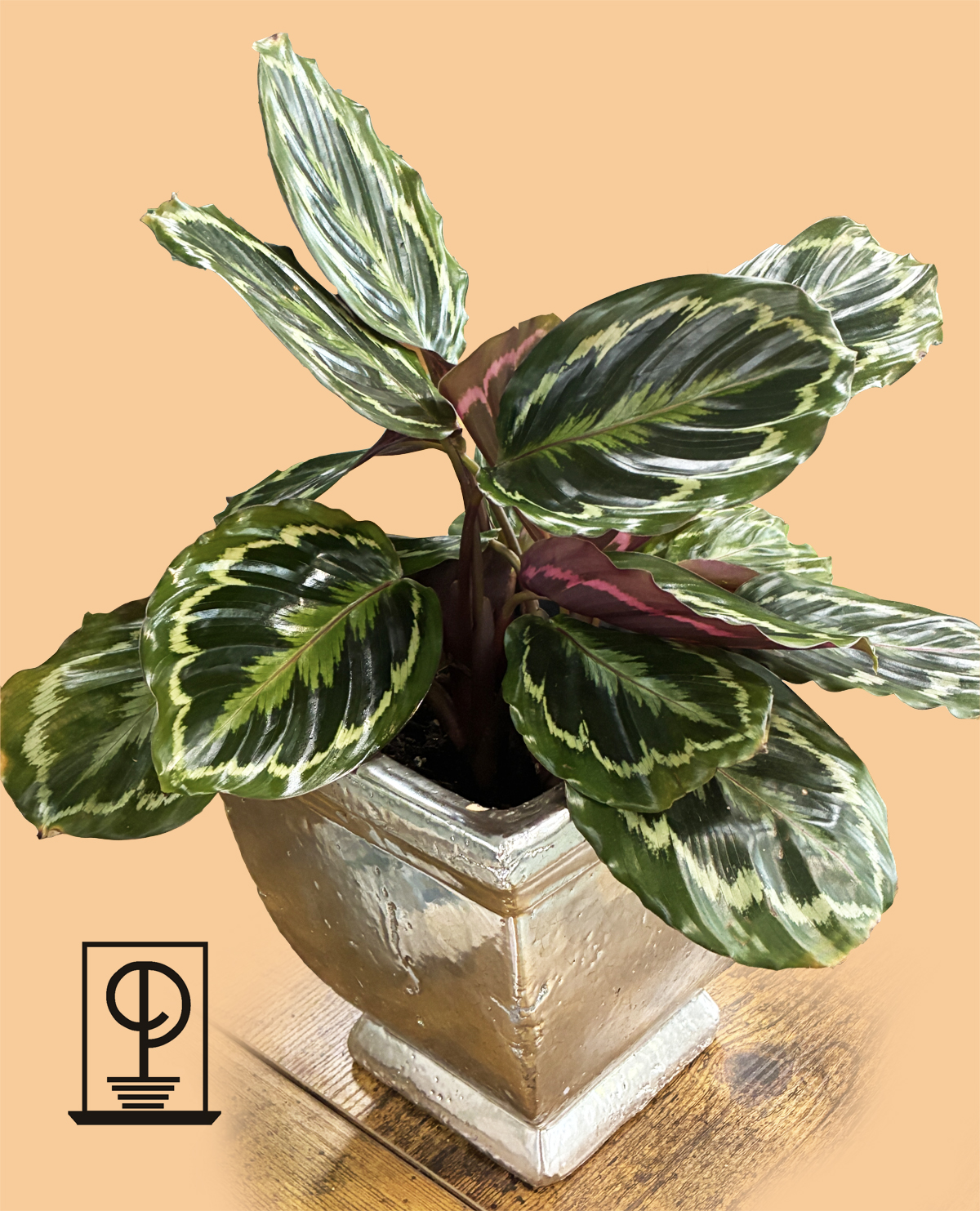
roseopicta
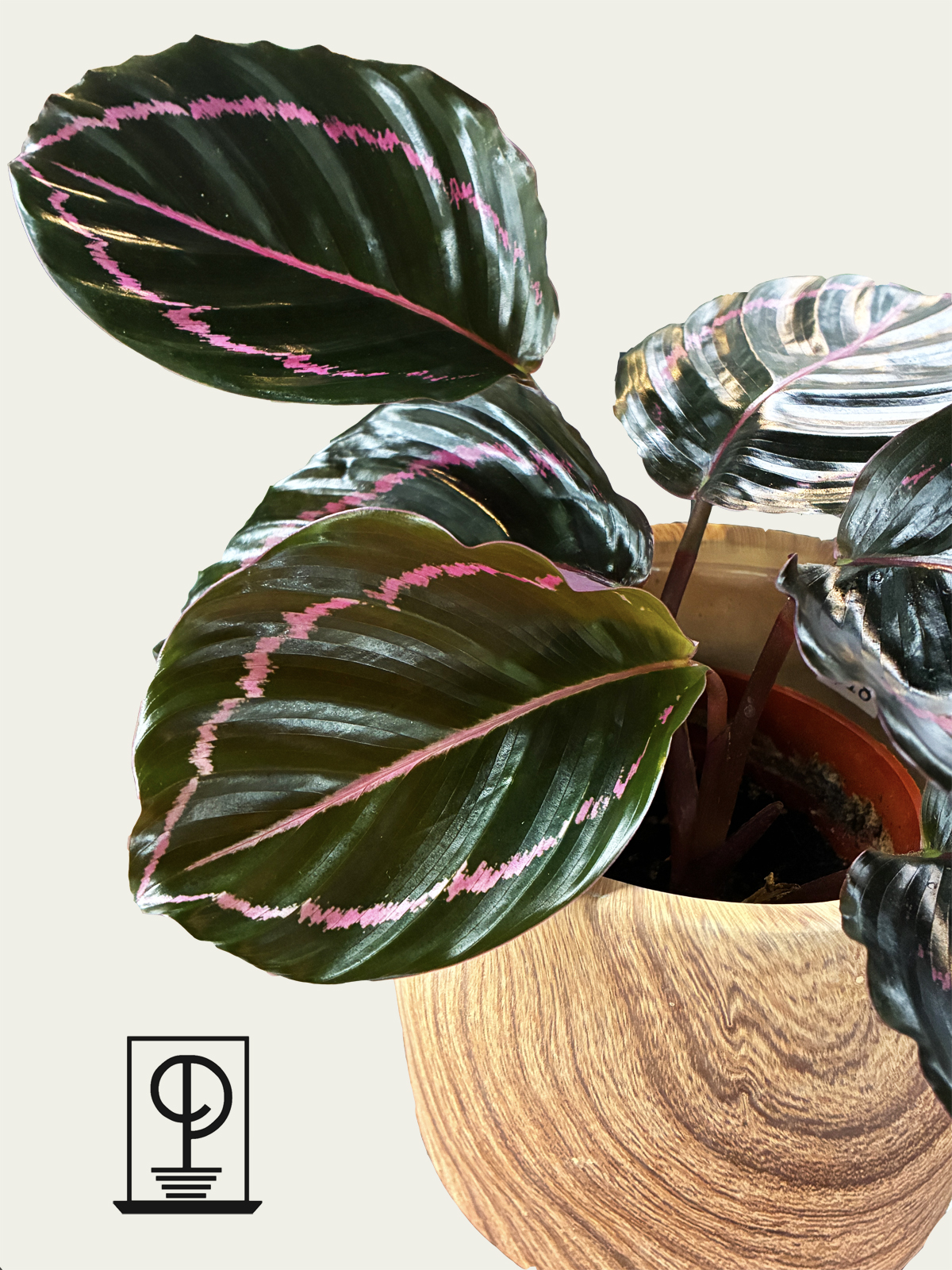
Roseopicta means "rose-painted" as the species is rosy-pink on its underside, though predominantly green. Hybridizers have capitalized on the pink and made some incredible cultivars like the one pictured here named Dottie.
| Calathea roseopicta |
|---|
| Difficulty | Difficult |
| Light | Moderate indirect light (colors fade in bright light) |
| Temperature | 65°F – 80°F |
| Water | Requires high humidity and purified water to maintain dark leaf health. |
zebrina
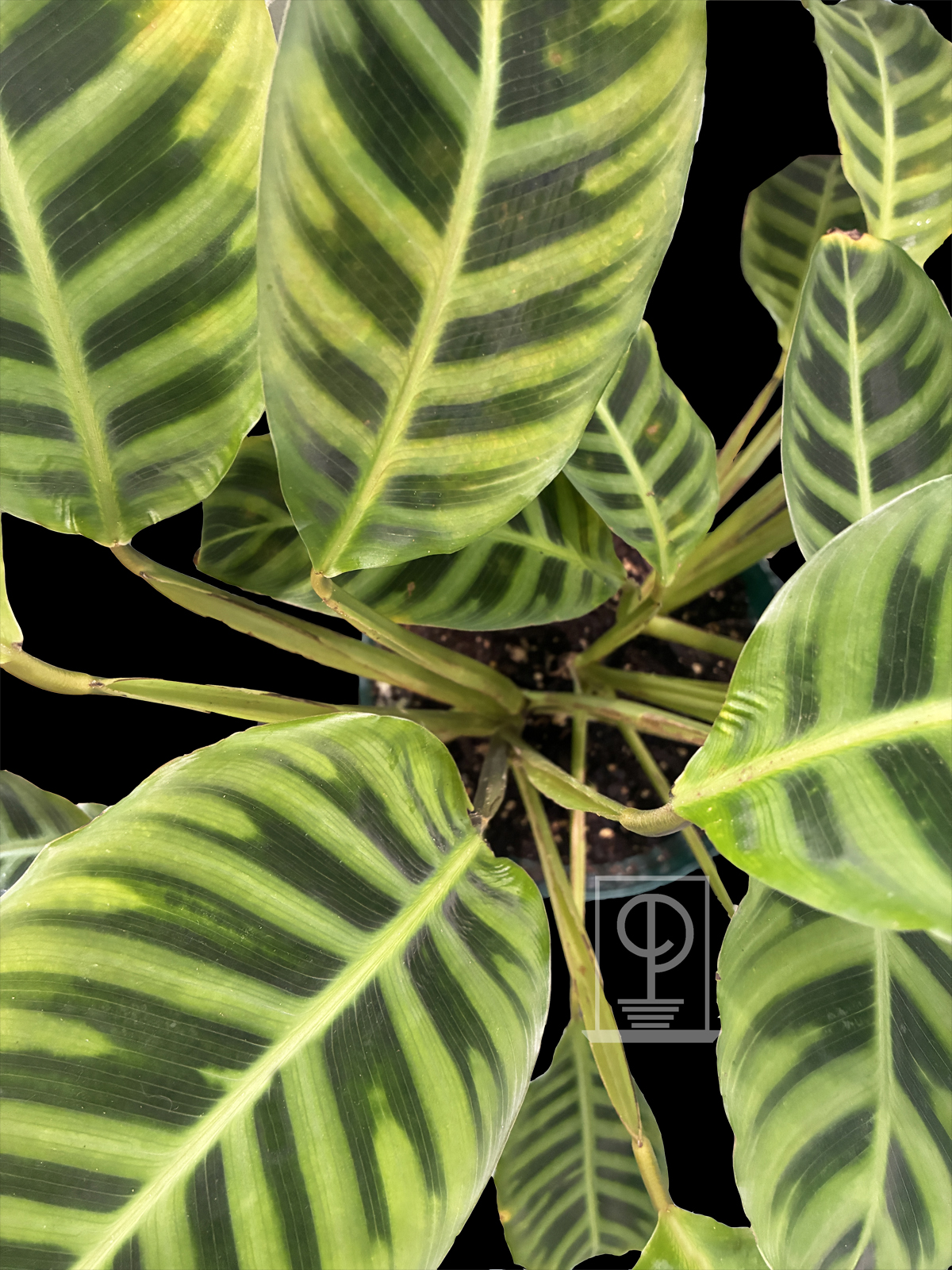
Calathea zebrina is from Brazil and has velvety, vibrant-green leaves marked with dark green “zebra” stripes. Its foliage furls upward at night and unfurls in the morning.
| Calathea zebrina |
|---|
| Difficulty | Moderate to Difficult |
| Light | Bright, indirect light. Direct sun will scorch the leaves. |
| Temperature | 65°F – 80°F. Very sensitive to cold – do not let it get below 50 degrees. |
| Water | Water when the top 1 inch (2.5 cm) of soil feels dry. Water quality matters – prefers distilled or RO. Must have high humidity (65%-80%) to prevent crisping of leaves. |
The Planted Parlour’s Tips and Tricks for Success!
- Get the right oneCheck out the different care requirements for the various types in the section above. You’ll see that Calatheas have wide ranging personalities depending on the species. If you’re a hands-off person, there ARE Calatheas for you, but read those care instructions to be sure you get the right one. If you like plants that require more care there are other Calatheas you should like.
- It’s all about the waterIf you want your Calatheas to be healthy, happy and looking their best you need to consider the water you’re using. To a varying degree different Calatheas will develop browning from impure water. We use the local tap water here in Grover Beach and the easy-moderate-to-grow varieties don’t get affected much at all. More difficult species such as Orbifolia and Makoyana can get more browning. Very difficult cultivars like White Fusion require pure water. If you see browning on your Calathea leaves, particularly if it starts at the leaf tips, simply buy a bottle of distilled water and use it for that plant. It will reward you with beautiful leaves. For those more difficult varieties, adding ambient humidity can also help with leaf browning.
- Monitor leaf movementOne of the most fascinating things about Calatheas is their ability to move their leaves to follow the light. In some species, such as lancifolia, the motion can be quite abrupt at times, making an audible flick as leaves brush up against each other. But leaf movement can also be a sign of light stress. The plants tend to fold or roll their leaves up at night. If you see your Calathea doing that in daylight it is possibly a sign that it is getting too much light. Move it to slightly lower light and see if it adjusts.
Learn More…
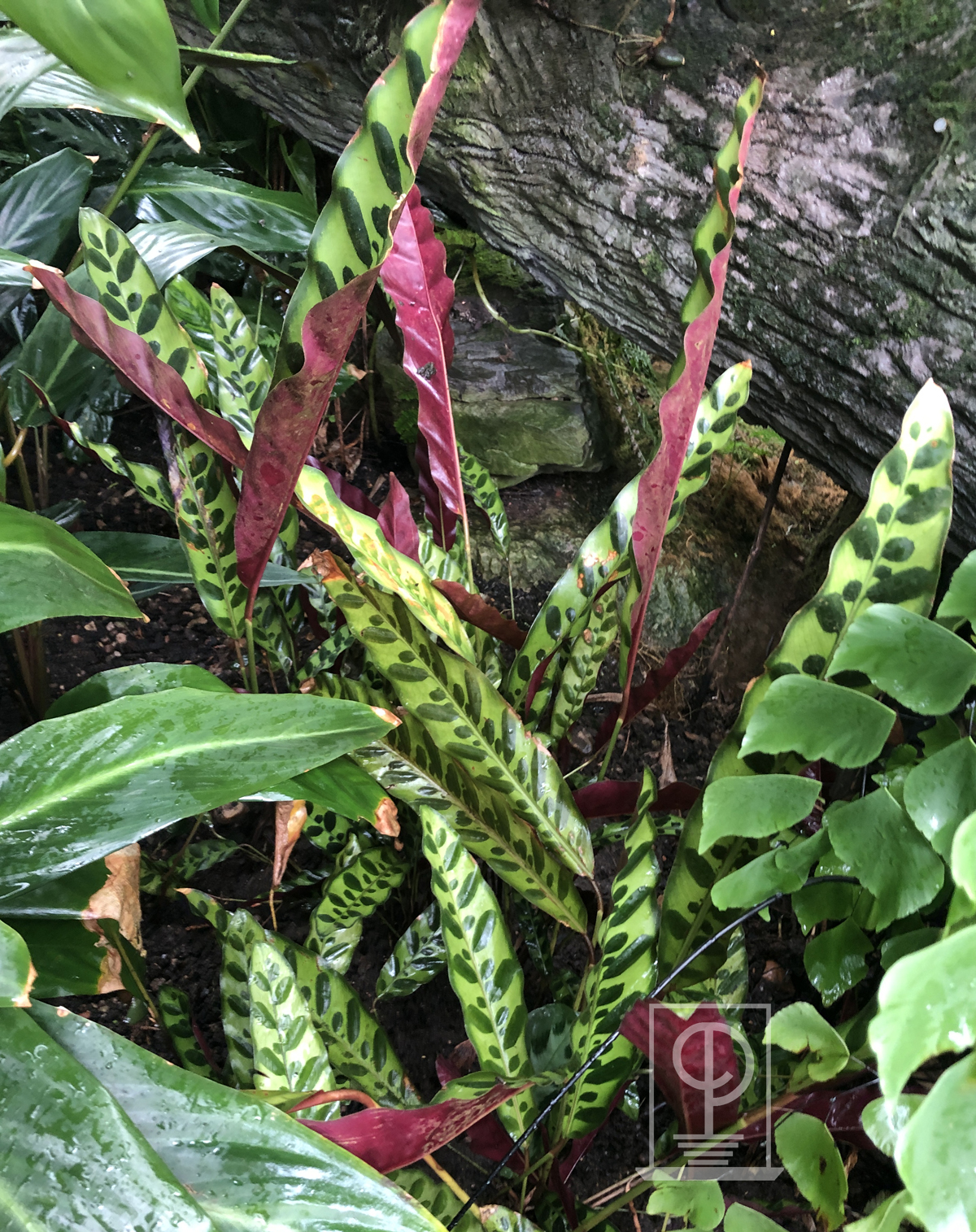 Calatheas and many other jungle understory plants have reddish leaf undersides due to an evolutionary adaptation that helps them thrive in low-light tropical environments. Plants absorb light in the red to purple wave lengths (into ultraviolet, of course) which is why we see their leaves as green. Objects we see as green are reflecting that color light back to our eyes, the plants aren’t absorbing the green wavelength light, they’re bouncing it back at us. They want the red to purple (as well as blue) light for photosynthesis. As sunlight passes through the cells of the leaf, they grab as much of that red-purple-ultraviolet light as they can but any of it that makes it to the bottom of the leaf is reflected back to the green cells by a layer of red pigment (called anthocyanin) so the green cells can have a second chance at capturing the desired light. This reddish-purple underside is also one of the most striking features of many Calatheas. Note the beautiful red undersides on the photo on the right taken at Kew Gardens in London of Calathea lancifolia.

This plant is
PET FRIENDLY!