Hoya
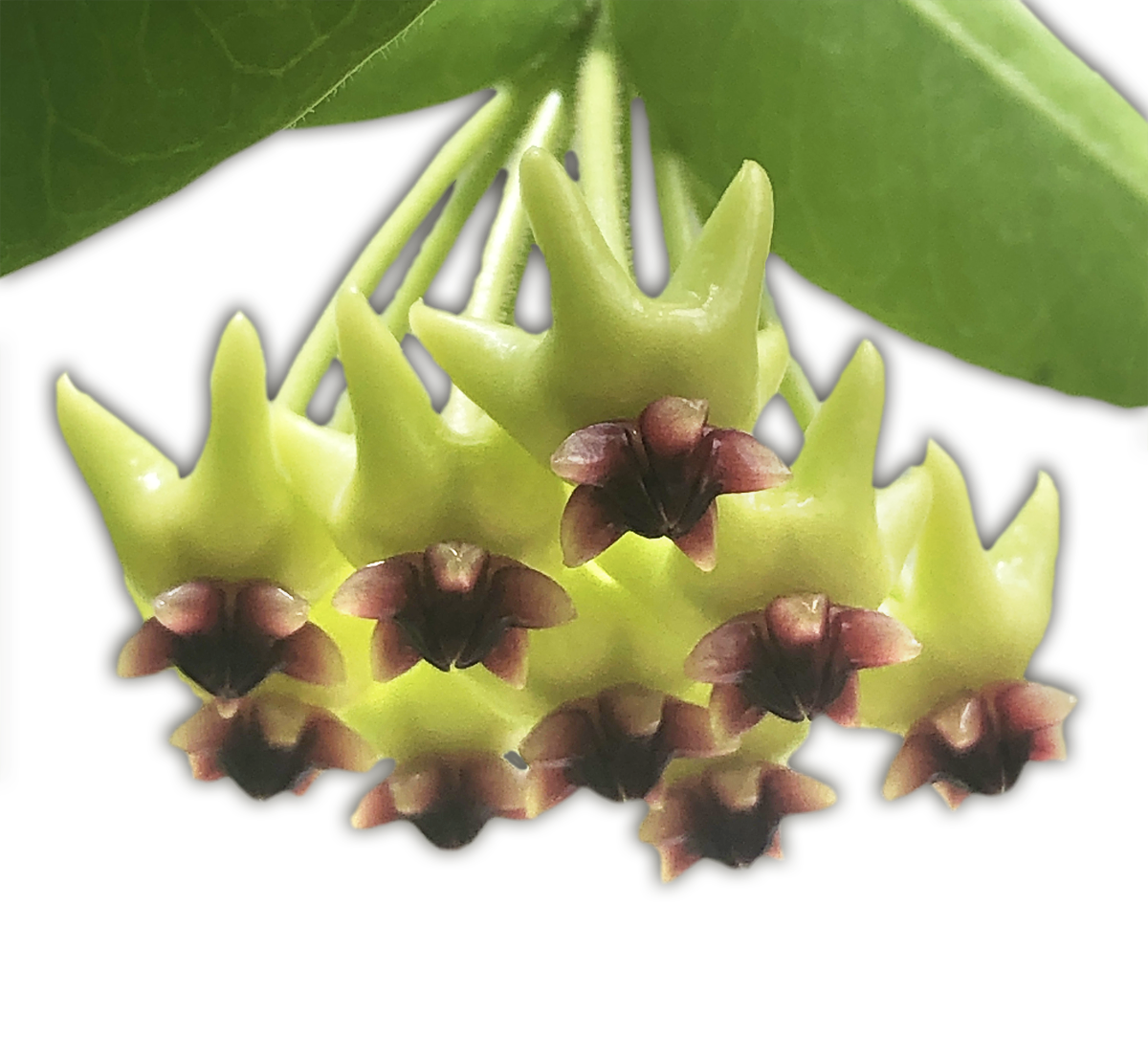
Hoya (‘hoiə), commonly known as wax plants due to their thick, waxy leaves, are tropical, typically vining or trailing plants related to milkweed.
While Hoyas are grown for their beautiful, sometimes even variegated, foliage, the most rewarding feature of Hoyas has to be the fragrances. Each species is slightly different but all of them smell amazing when they bloom – and they’ll fill the room with their powerful perfume. A number of them grow well outside here at the coast with light protection.
Common Varieties & Care
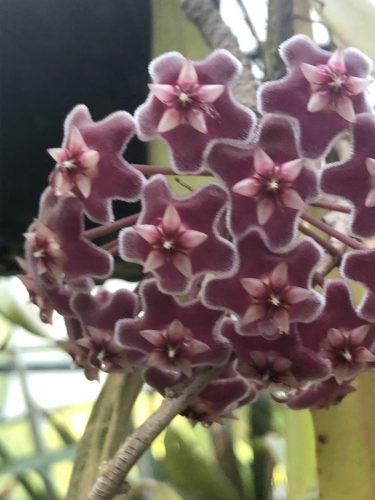
| Hoya pubicalyx care | |
|---|---|
| Difficulty | Easy |
| Light | Bright, indirect light; can tolerate some morning sun. |
| Temperature | 65°F–85°F (18°C–29°C); avoid cold drafts below 60°F. |
| Water | Allow top 2″ of soil to dry – pot in draining mix; drought-tolerant but enjoys regular watering. |
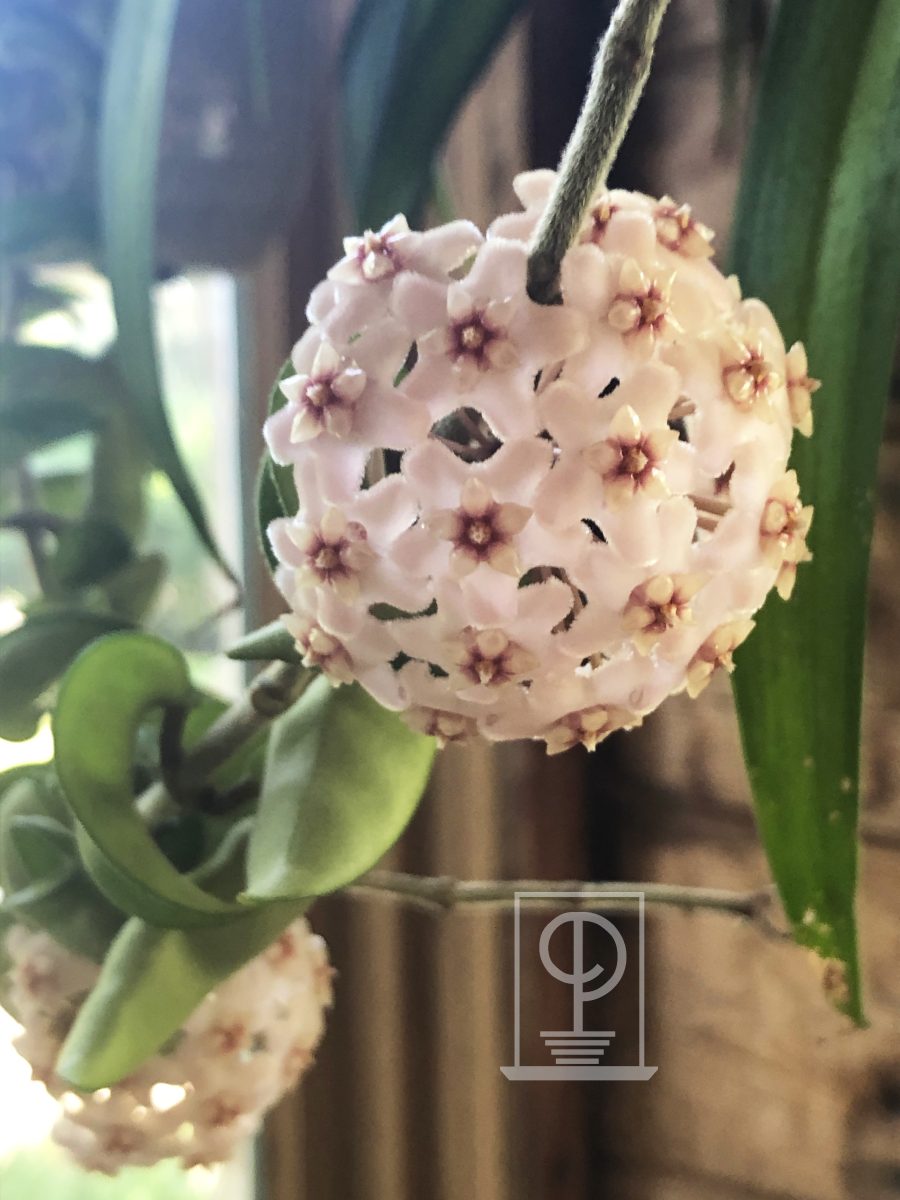
| Hoya carnosa care | |
|---|---|
| Difficulty | Easy |
| Light | Bright, indirect light; very adaptable to lower light levels. |
| Temperature | 60°F–85°F (15°C–29°C); highly resilient to fluctuations and can grow outside here at the coast with light protection. |
| Water | Use a draining mix and allow soil to dry out almost completely between waterings. Be extra careful with Hindu Rope, which can rot easily from soggy soil. |
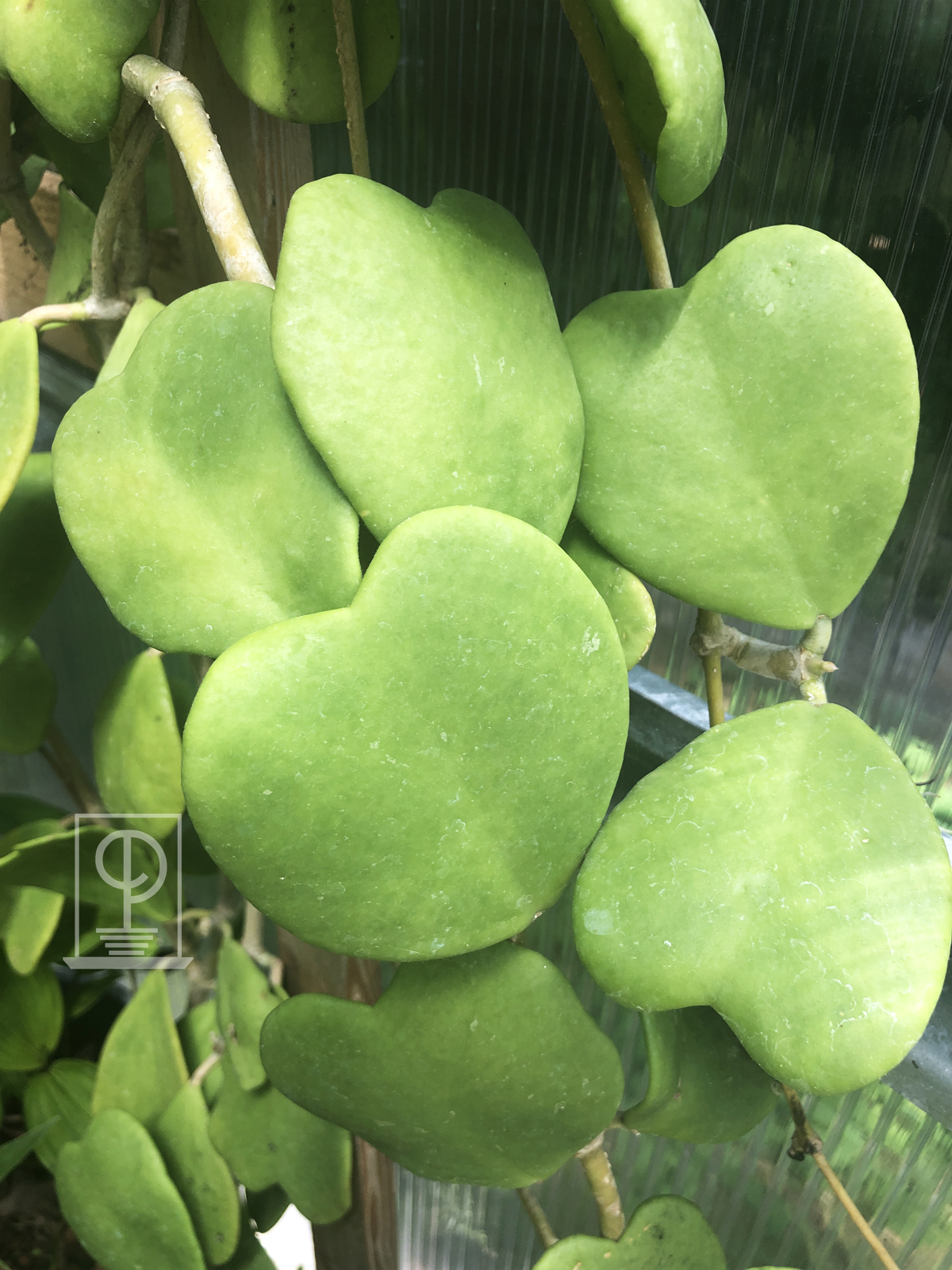
| Hoya kerrii care | |
|---|---|
| Difficulty | Easy |
| Light | Bright, indirect light to full sun; needs high light to produce vines. |
| Temperature | 65°F–80°F (18°C–27°C); prefers consistent warmth. |
| Water | Very infrequent; Pot in a well-drained mix and wait until leaves feel just slightly soft. |
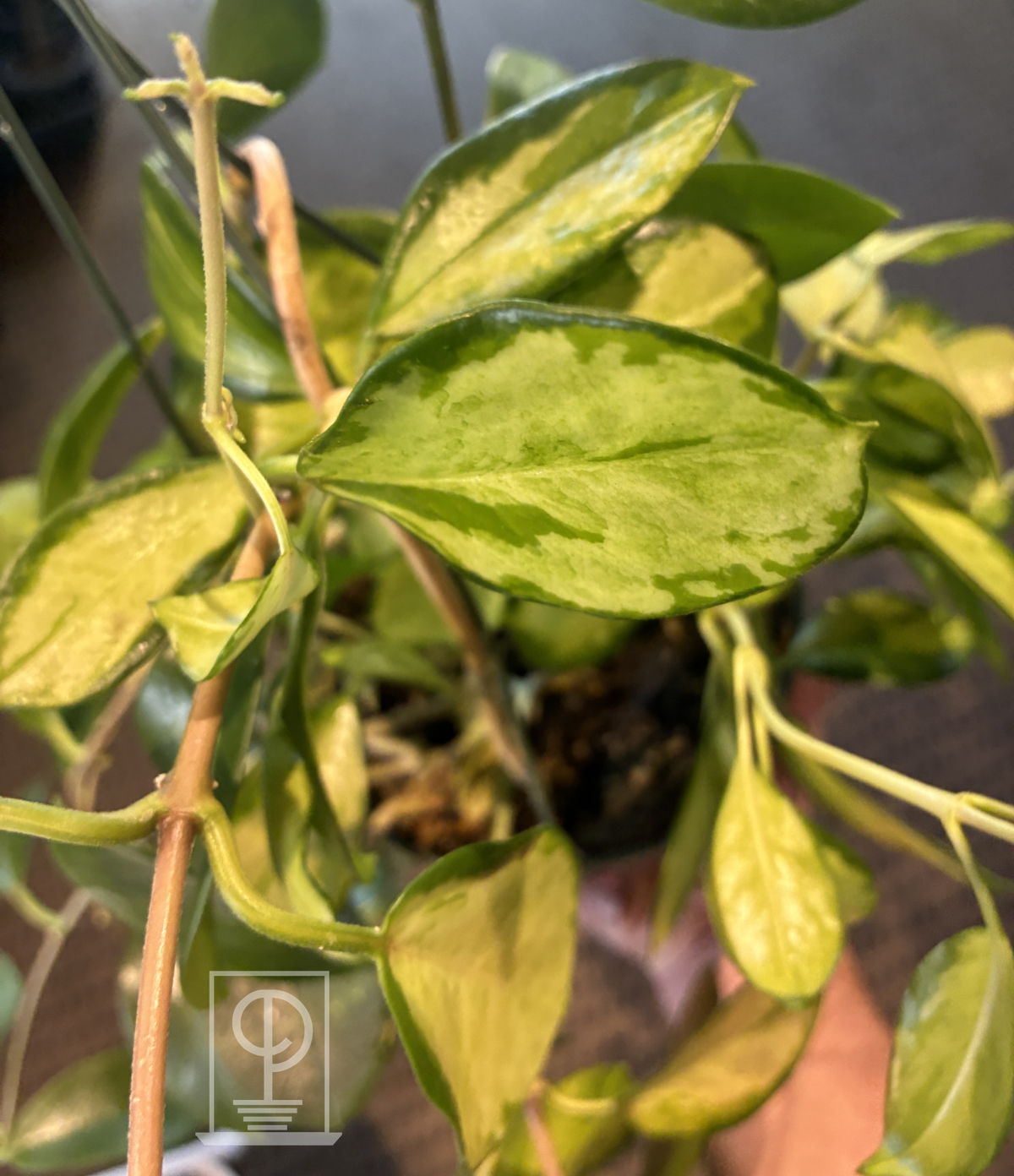
| Hoya australis care | |
|---|---|
| Difficulty | Easy |
| Light | Bright, indirect light; variegation is most vibrant with high light. |
| Temperature | 65°F–80°F (18°C–27°C); sensitive to cold shock. |
| Water | Moderate; allow top 50% of soil to dry before soaking thoroughly. Mix can be well-draining but less chunky is fine. |
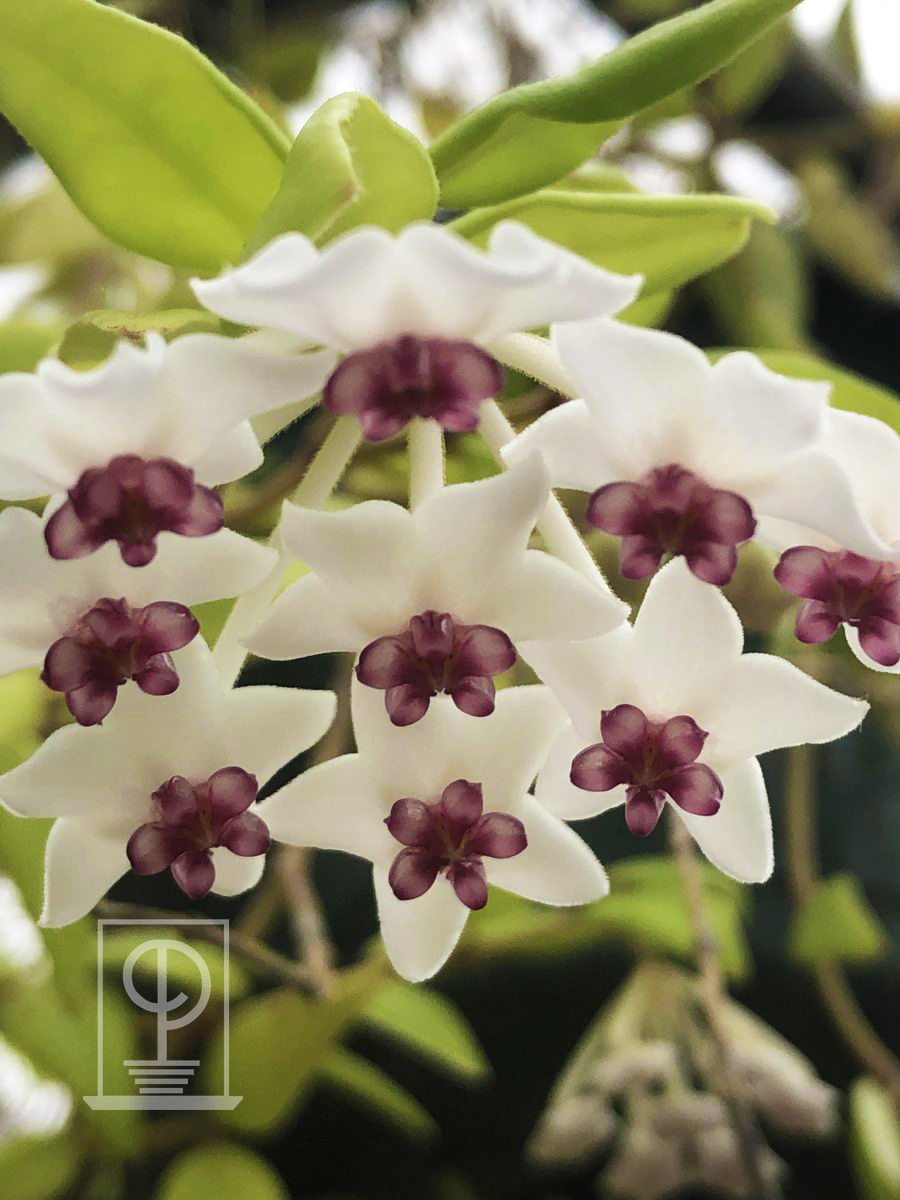
| Hoya bella care | |
|---|---|
| Difficulty | Moderate |
| Light | Bright, filtered light; sensitive to harsh, direct afternoon sun. |
| Temperature | 60°F–75°F (15°C–24°C); prefers slightly cooler nights and can take brief cool dips. Grows well outside here at the coast. |
| Water | Keep soil consistently lightly moist; do not let it dry out completely. Grow in a well-draining but moisture-retentive mix. |
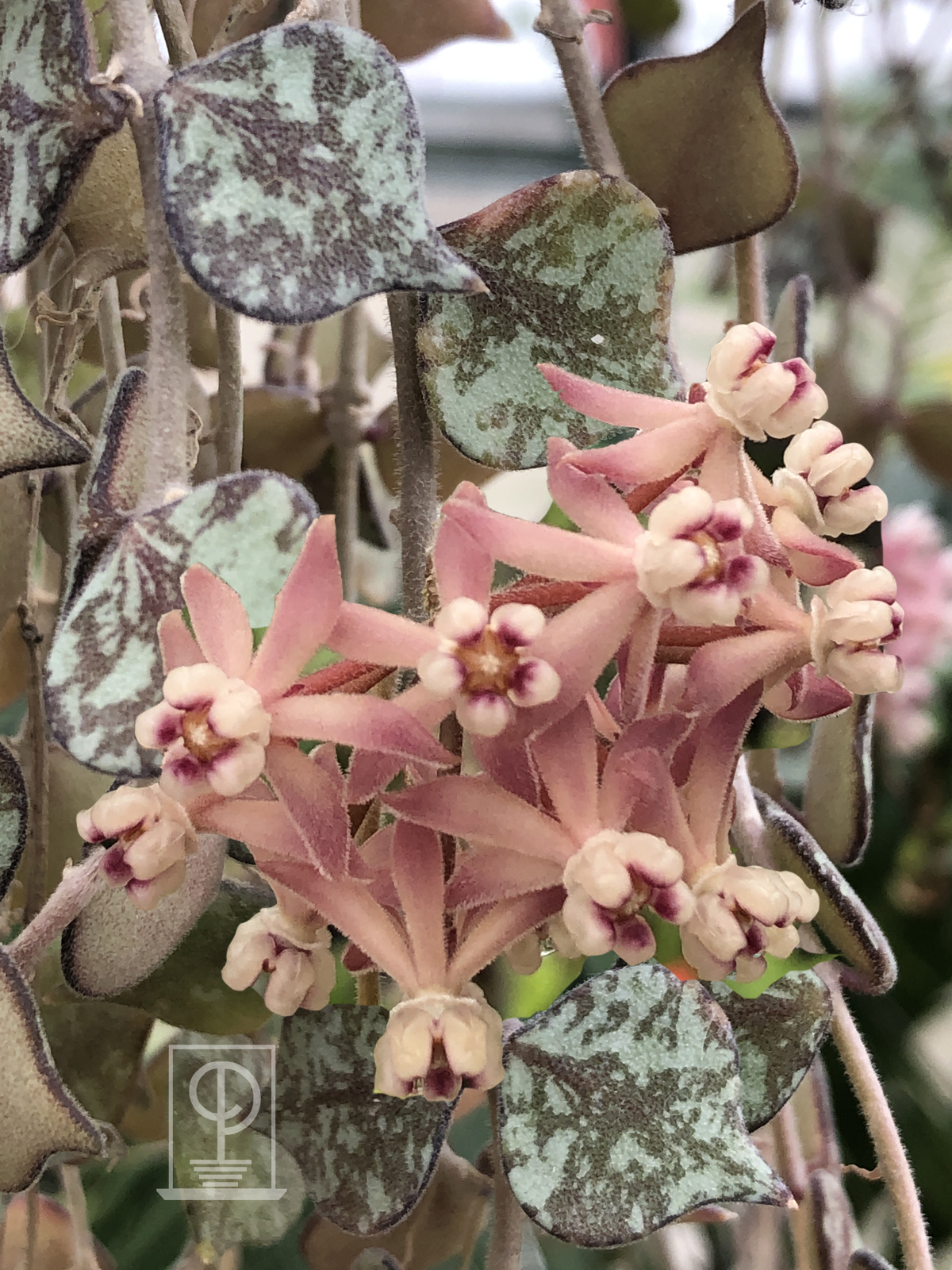
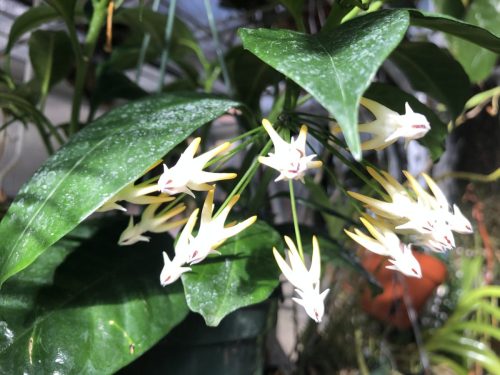
| Hoya curtisii care | |
|---|---|
| Difficulty | Moderate |
| Light | Bright, indirect light; requires high light to bloom. |
| Temperature | 65°F–80°F (18°C–27°C); do not place it near vents or external doors, it likes static temperatures. |
| Water | Allow top 1" to dry; sensitive to both extreme drought and soggy roots. Best grown in a fine, well-draining mix such as small orchid bark. |
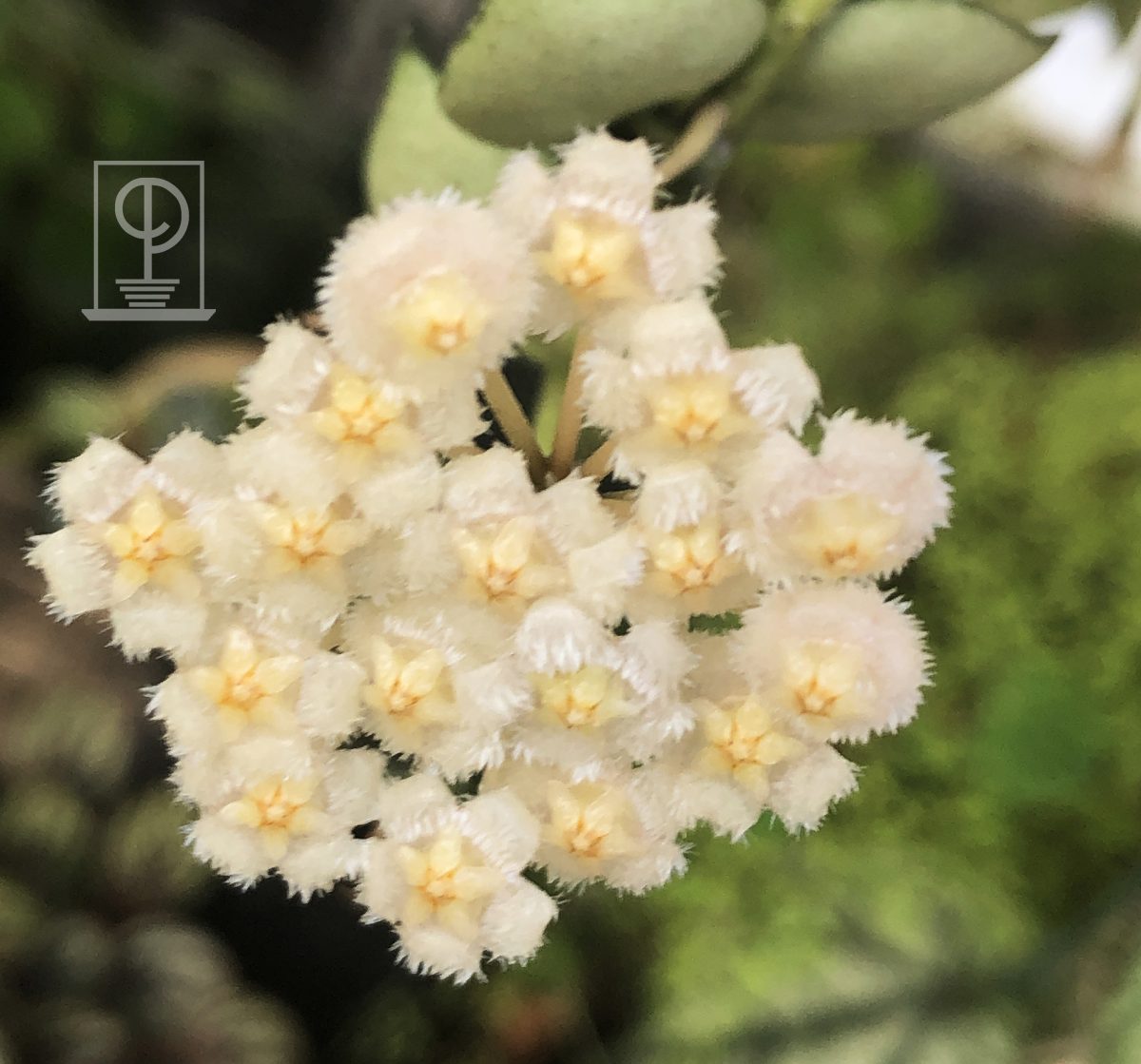
| Hoya multiflora care | |
|---|---|
| Difficulty | Moderate |
| Light | Medium to bright indirect light; direct sun will scorch thinner leaves. |
| Temperature | 65°F–85°F (18°C–29°C); does not tolerate cold well. |
| Water | Prefers “evenly moist” soil, more like typical houseplants. |
| Hoya krohniana care | |
|---|---|
| Difficulty | Easy |
| Light | Bright, indirect light; can tolerate some direct morning sun. |
| Temperature | 65°F–80°F (18°C–27°C); thrives in warm environments. |
| Water | Allow top 1″ of soil to dry; more moisture-loving than H. carnosa. |
The Planted Parlour’s Tips and Tricks for Success!
- Bigger is better.With the trend of small Hoya cuttings being sold online to be always increasing, it’s important to know that, while most Hoya cuttings do root relatively easily, many of them need to be very large before they will produce flowers. And some species grow extremely slowly. That Hoya kerrii heart-shaped, barely rooted single leaf you see for sale around Valentines Day is a decade or more from having flowers. So do your research, unless you’re growing it only for foliage, purchase slow-growing, large-blooming Hoyas as adult plants and not as cuttings. And it can be years before that barely rooted single leaf even puts out a second leaf, so if you want to get a starter plant, chose one that’s rooted with a couple of leaves. It will grow much faster from that stage.
- Mind the peduncle!Hoyas can take years to grow to blooming size. But once they produce a bloom spike, or "peduncle", they will bloom repeatedly on that peduncle, so don’t cut it off, even after the flowers go away, more will come.
- Treat them more like "succulents"One way to kill a Hoya is overwatering. Big Box stores would have you believe that you have a problem with overwatering because your plants all rot when you buy them from there – but have you ever considered that the Big Box used cheap, water-retentive peat potting mix and THAT’S why your Hoya died? These plants want lots of drainage. Use a good, well-draining potting mix (or just buy your Hoya from us because we sell things potted for success) and you can keep a regular watering schedule without issues. Your Hoya will be happy.
- Keep an eye on your Hindu RopeWhile the gnarled leaves of Hoya Hindu Rope are an amazing addition to a plant collection, there is one concern that they bring, In the event that mealybug or a similar pest got into your plant collection, the curled leaves of Hindu Rope make a good hiding place for them, so every once in a while be sure to inspect your plant for pests. It’s a tough plant so mealybug won’t easily hurt it, but it can give it a nice home.
Learn More…
Named in 1810 by botanist Robert Brown, the Hoya genus honors his friend Thomas Hoy, the head gardener at Syon House for the Duke of Northumberland. While the genus is widely known for its waxy, star-shaped flowers—earning it nicknames like “wax plant” and “porcelain flower”.
One of the most remarkable species in the genus is the Hoya carnosa, which has been in cultivation for over 200 years. Modern research from the University of Georgia has highlighted its practical value, discovering that it is exceptionally effective at removing volatile organic pollutants from indoor air.
Beyond air purification, Hoyas exhibit fascinating biological adaptations:
- Perennial Bloom Spurs: Unlike most plants, Hoyas bloom from the same specialized stems, called peduncles, every year. If these are trimmed, the plant may never bloom again from that spot.
- Ant Symbiosis: Some species, such as Hoya darwinii, grow hollow, ball-shaped leaves specifically to house ant colonies. The ants provide nutrients through their waste, while the plant provides a protected home.
- Pollination Strategy: Hoyas are among the few plants (alongside orchids) that package their pollen into sticky sacs called pollinia, which hitch a ride on the legs of visiting insects.
More About Pollination…
Hoyas are primarily pollinated by moths, particularly nocturnal species attracted to the plants’ strong evening fragrances and nectar.
Key pollination facts:
- Nocturnal Attraction: Many species produce white or pale flowers with scents that intensify at night to lure nocturnal insects. There are many species of plants with white flowers that also smell at night, as white is the most vibrant color in moonlight.
- Other Potential Pollinators: While moths are the most common, Hoyas can also be visited by bees, butterflies, hummingbirds, flies, and ants.
- Self-Pollination: Several species, including Hoya carnosa, Hoya pottsii, and Hoya burtoniae, are capable of self-pollinating to ensure reproduction when external pollinators are scarce.
- Specialized Mechanism: Unlike most plants with loose pollen, Hoyas use a complex system where pollinators must physically step on and “clip” onto pollinia to transport them.
A Hoya Species Gallery
A selection of photos of Hoya species(All photos copyright The Planted Parlour).
"Species" means the plant as it is found in its natural habitat, not hybridized by people.